


.jpg)
.jpg)
.jpg)
 01010
01010 Foix - France - C. X
 S: 1/175
 Approx. Nº of pieces: 8.500
 Difficulty degree: 8/10
.jpg) Sizes(mm): 670x420x365
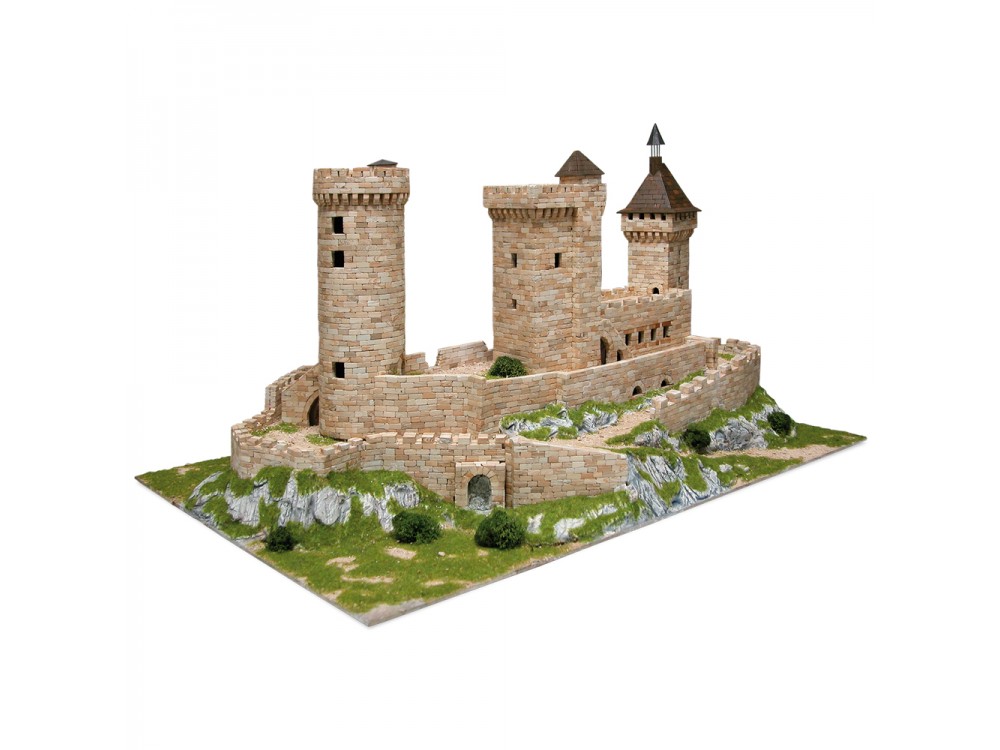
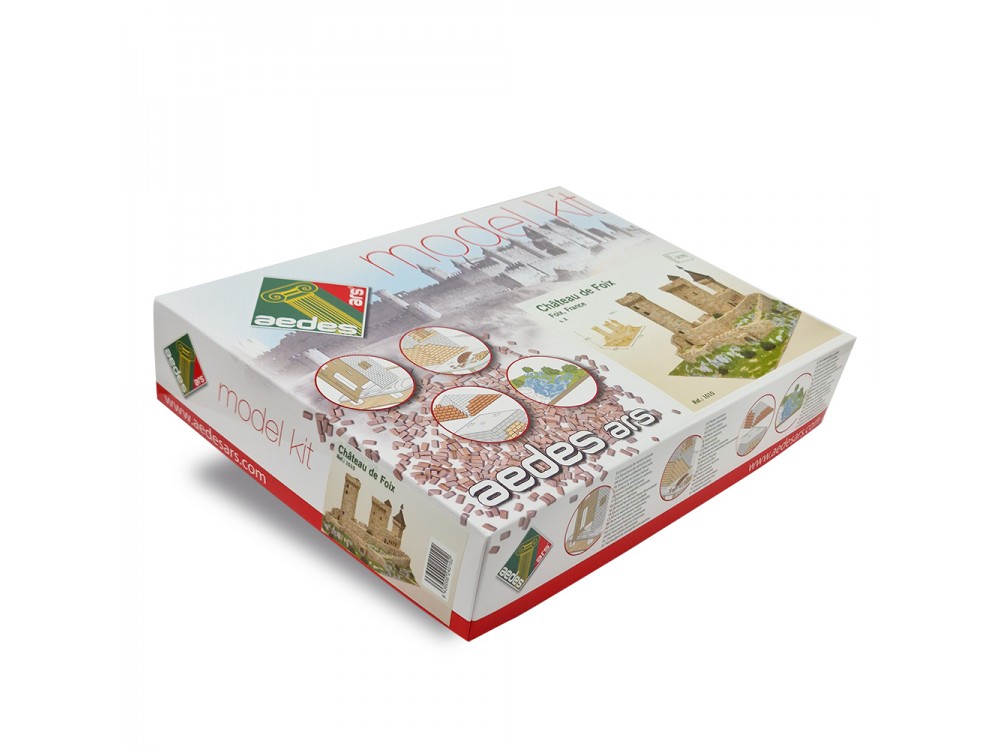
Sizes(mm): 670x420x365 Château de Foix castle model kit
The Castle of Foix: History and Legend
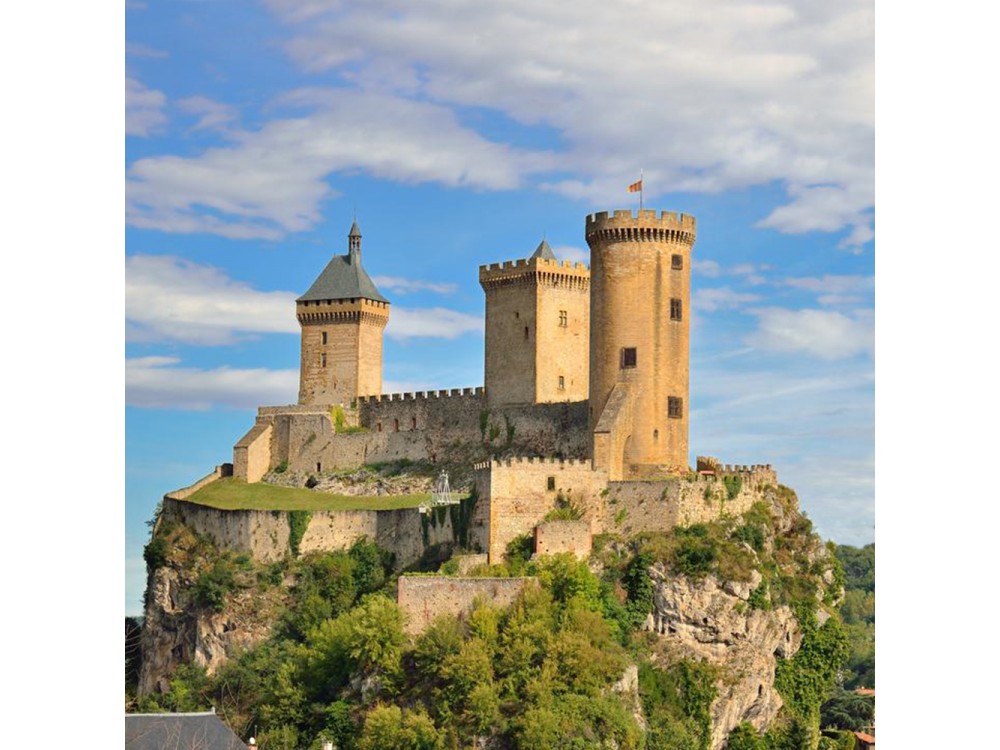
Rising above the skyline of the city of Foix from a towering rock over 60 meters high, the Castle of Foix is more than just a monument—it is a thousand-year-old witness to battles, beliefs, and power. Located in the heart of the Ariège region in southern France, this majestic castle stands at the confluence of the Arget and Ariège rivers, a strategic point that for centuries controlled access to the upper valley.
Its history goes back long before its walls were ever built. The limestone rock on which it stands shelters caves that were inhabited since prehistoric times, and during the pre-Roman Celtic era, a small fortification already existed there—mentioned even by Julius Caesar in 58 BC. Later, a pagan sanctuary was erected on this very site, replaced between the 7th and 8th centuries by a defensive castrum. At the foot of the castle, a Carolingian abbey was built in the 9th century, later destroyed during the French Wars of Religion.
Charlemagne, determined to strengthen the Pyrenean defenses against advancing Muslim forces, modernized the structures, reinforcing their military role. The castle, as we know it, is first documented in the year 987 and appears in the will of Roger I of Carcassonne in 1012.
In 1034, it became the seat of the County of Foix, playing a crucial role in medieval history. During the Albigensian Crusade in the 12th and 13th centuries, the castle became a refuge for the persecuted and a bastion of Occitan resistance. Its story is marked by sieges—always withstanding the attacks, except in 1486, when it was briefly taken due to betrayal within the comital family.
In 1116, Ramon Berenguer III, Count of Barcelona, intervened militarily to suppress an anti-Catalan revolt, reasserting control over the region. From the 15th century onward, the castle became the official residence of the governor of the Pays de Foix, resisting even Cardinal Richelieu’s orders to dismantle many fortresses during the 17th century. Foix endured and remained active until the French Revolution.
Its towers are a testament to the castle’s evolution over the centuries. The two square towers, built before the 11th century, served as prisons for over 400 years, until 1862. The round tower, added in the 15th century, is the most recent and offers breathtaking views of the valley. The open square tower, known as the Tour d’Arget, specifically monitored the Arget river valley.
With its crenellated walls, 13th-century barbicans, and the Gothic rib vaults of its central tower, the castle not only reflects medieval architecture but also the intensity of a living history. Declared a Historic Monument in the 19th century and restored to recover its medieval character, the Castle of Foix has housed the Ariège Departmental Museum since 1930—where history and culture come together in every room.
And if you want to take a piece of this history home with you, you can do so with our scale model of the Castle of Foix, available on our website. Designed with precision and meant to be assembled stone by stone, this detailed reproduction lets you relive the building of the medieval fortress while creating your own version of this iconic castle. A unique experience for history lovers, model enthusiasts, and fans of medieval architecture.