


 01601
01601 Bibury, England – C. XIV
 S: 1/87
 Approx. Nº of pieces: 5.550
 Difficulty degree: 7/10
.jpg) Sizes(mm): 175x800x160
Sizes(mm): 175x800x160 Detailed graphic instructions
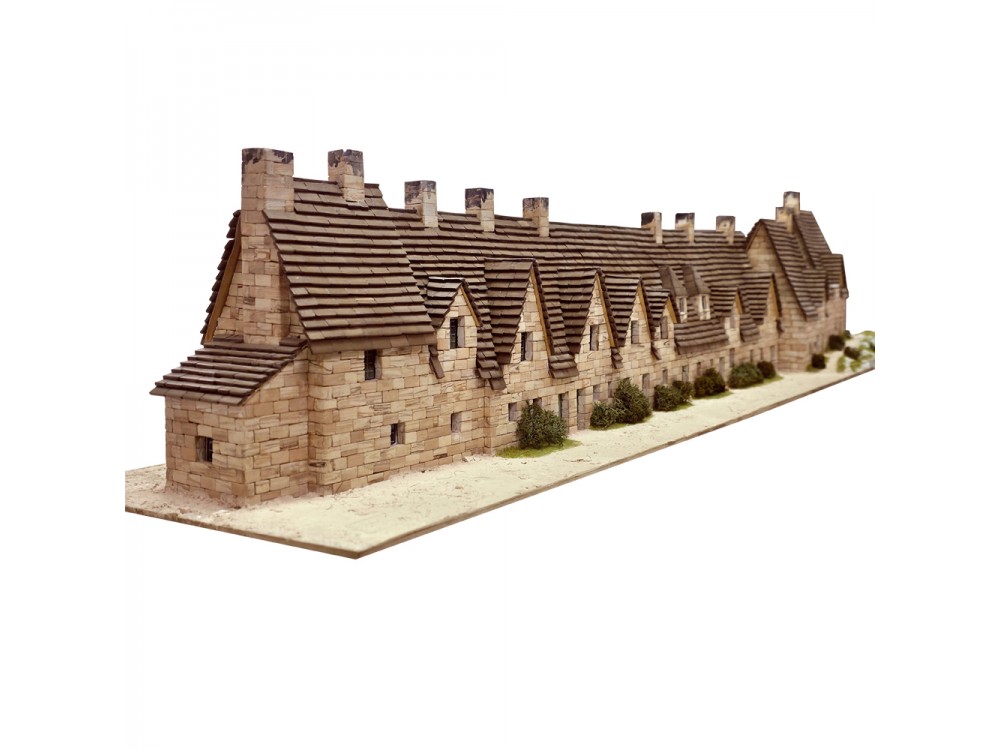
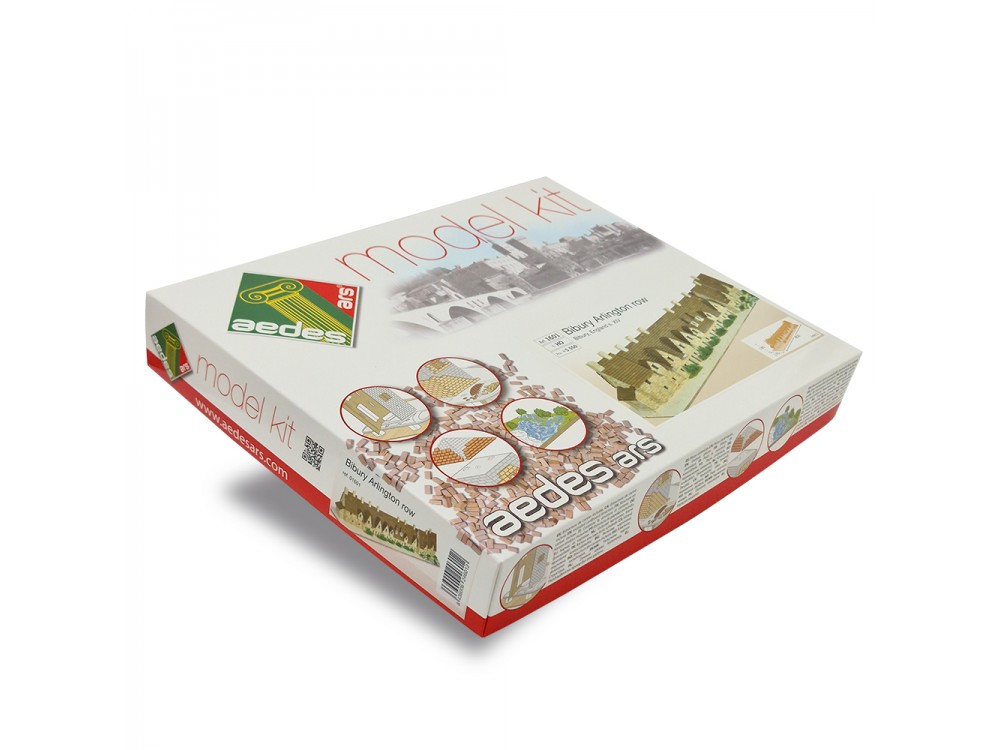
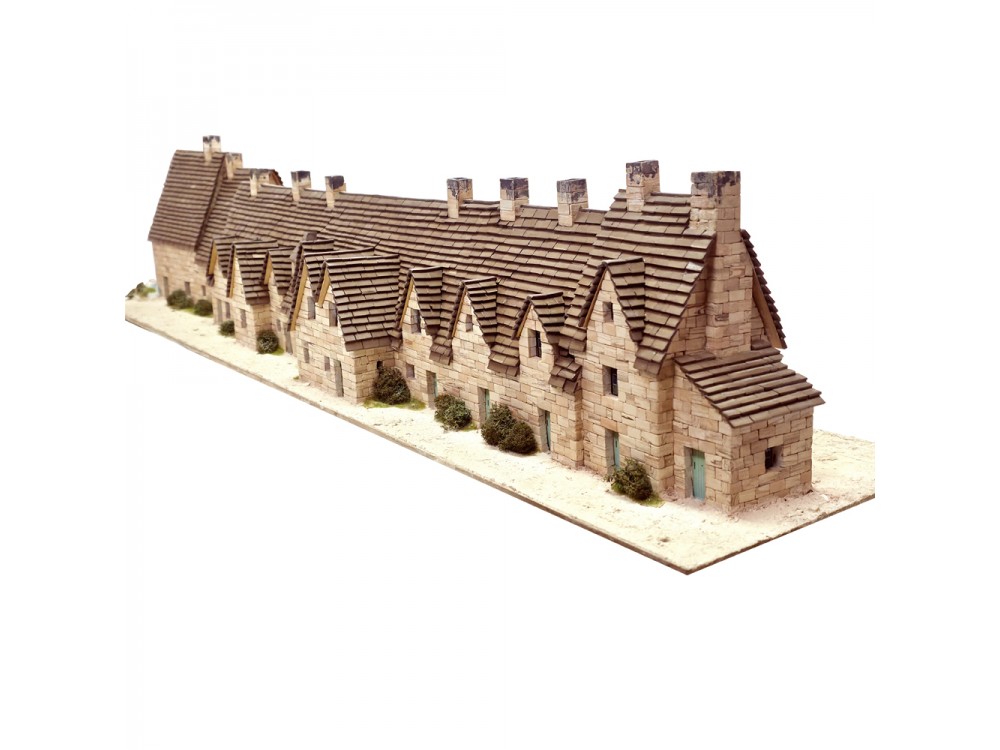
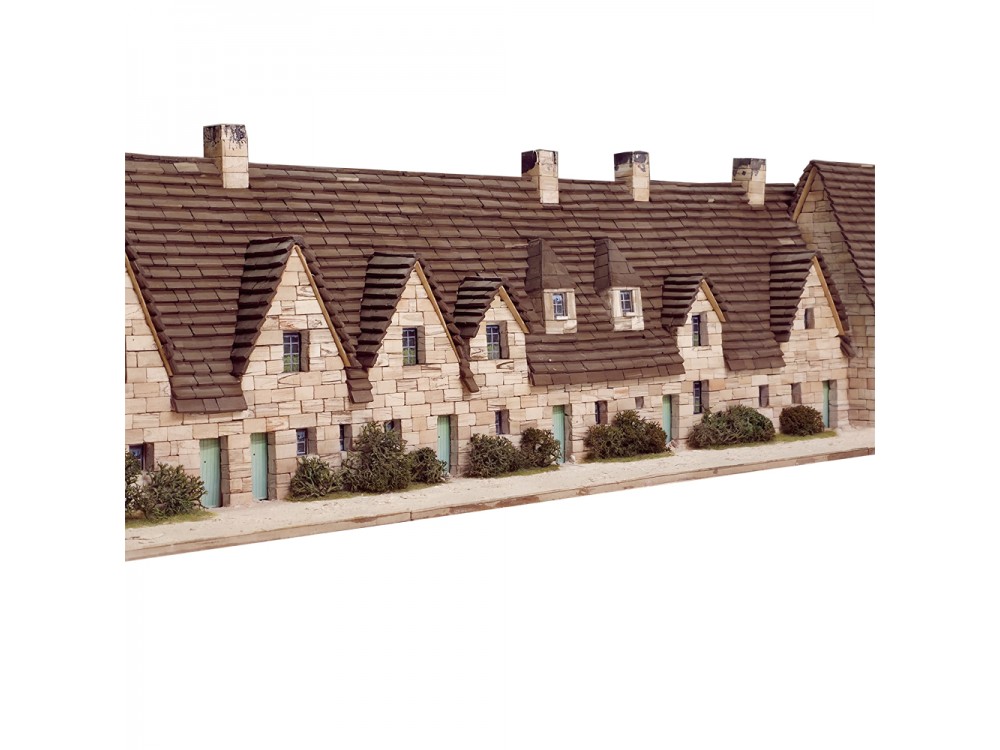
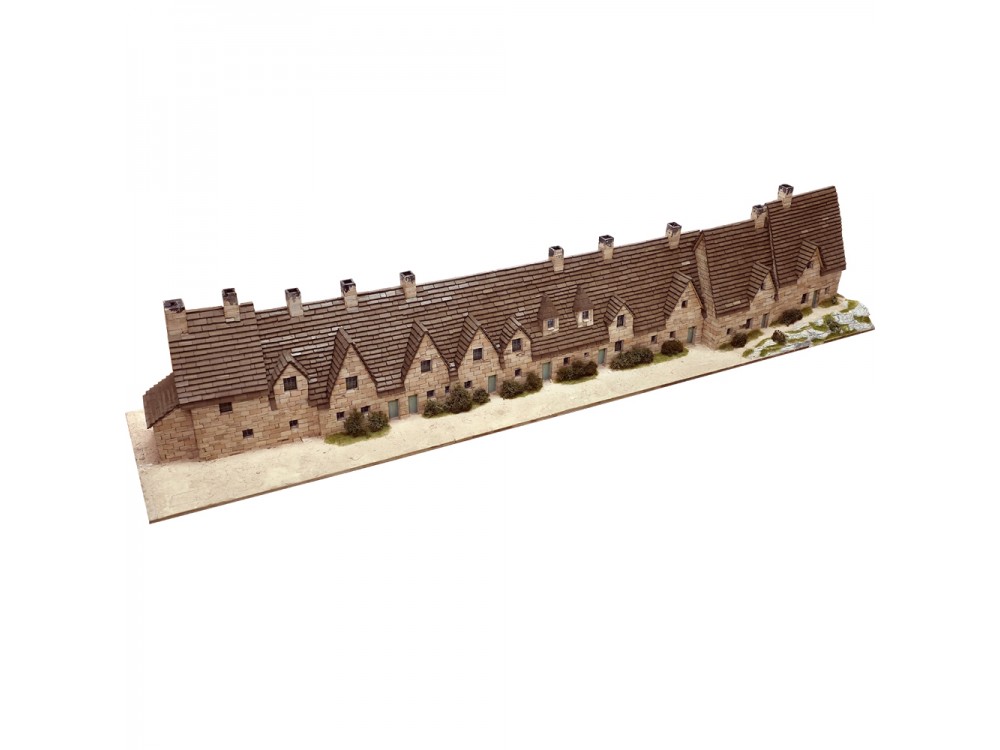
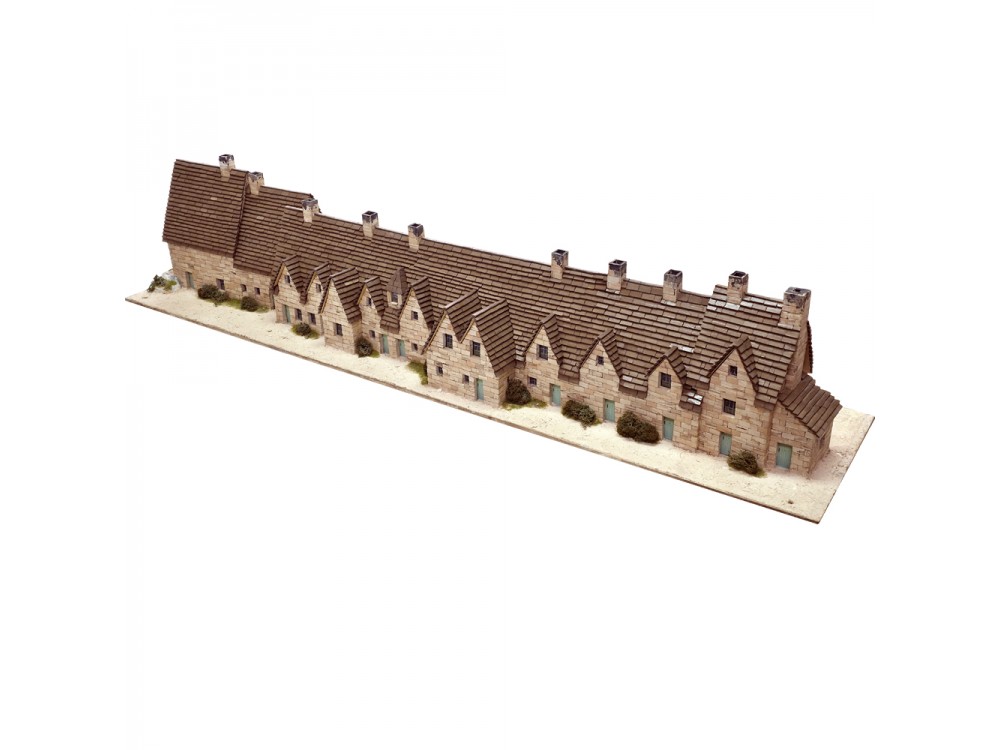
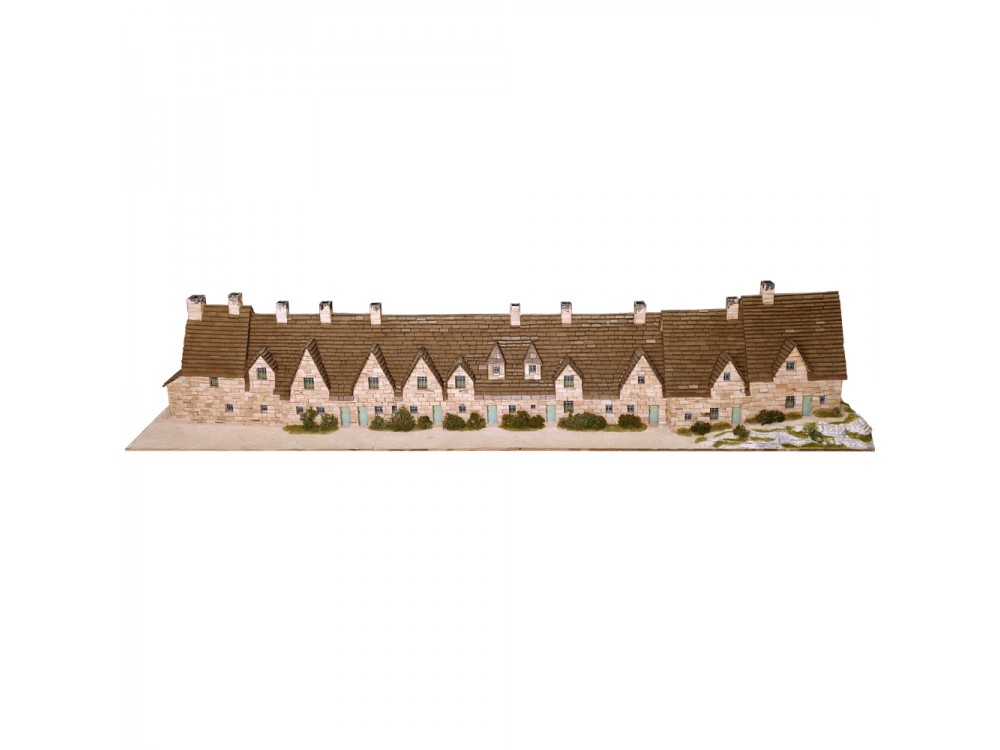
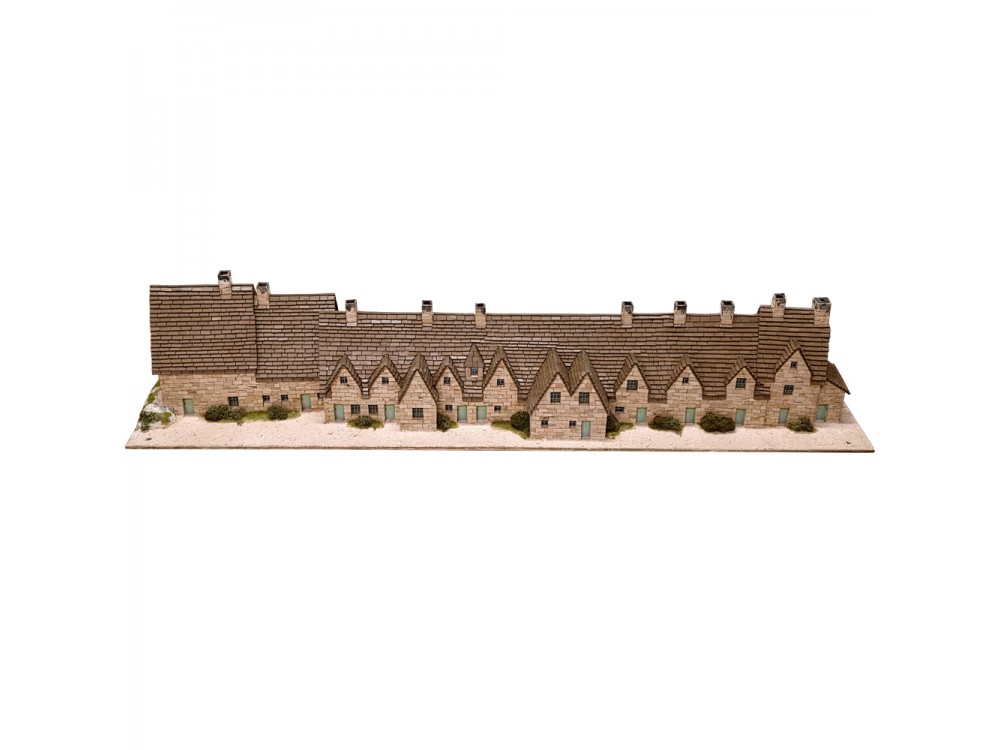
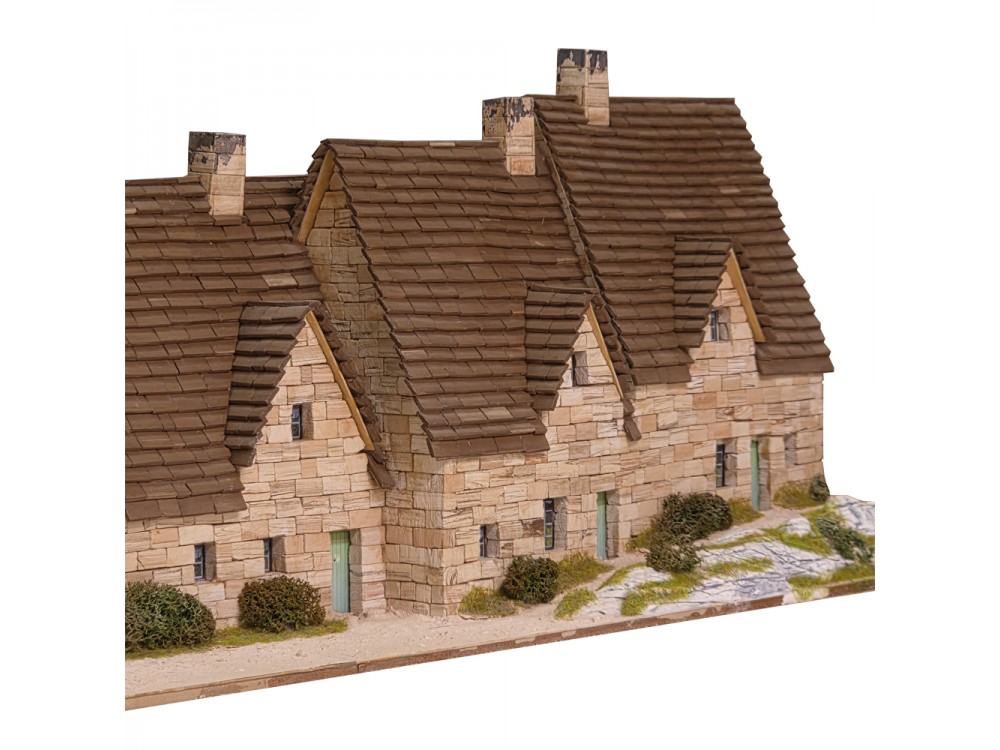
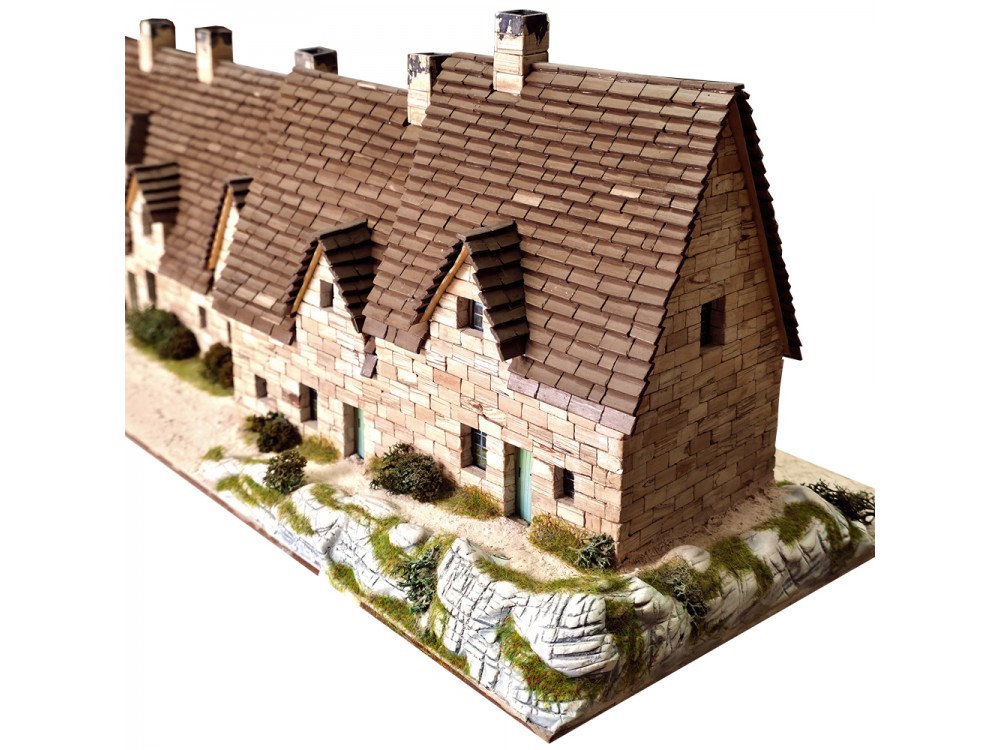
Bibury Arlington Row model kit
Arlington Row in Bibury: the charm of the Cotswolds
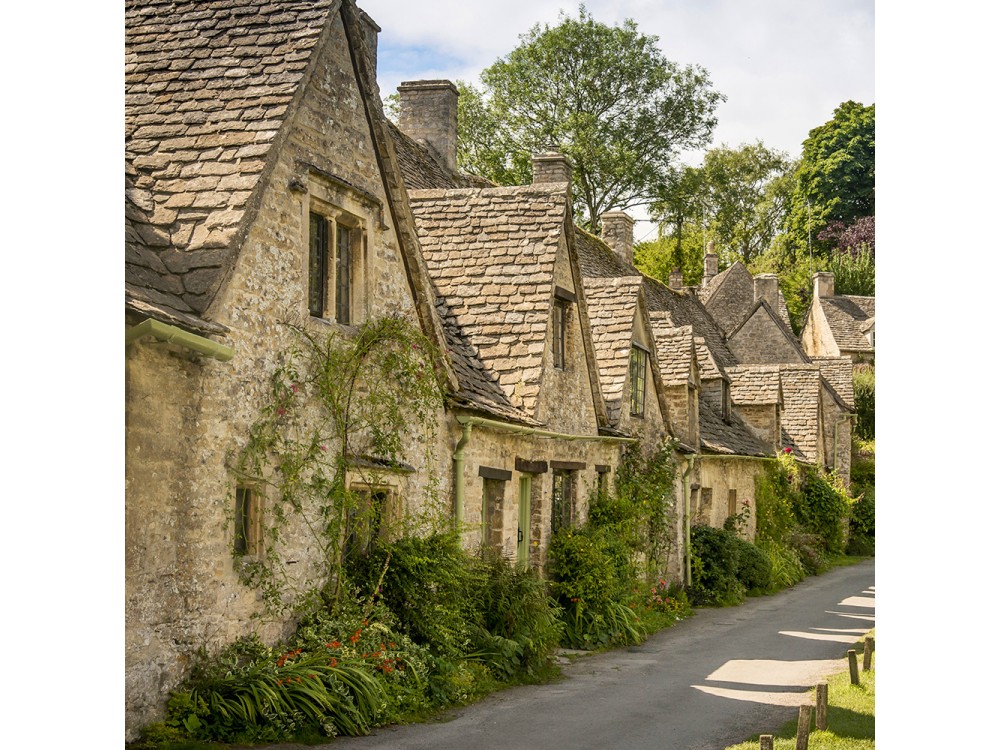
The group of houses known as Arlington Row, in the picturesque village of Bibury (Gloucestershire, England), is one of the most iconic sites in the Cotswolds and a symbol of the English countryside. These limestone cottages, aligned along the River Coln, form one of the most photographed views in England and are recognized as a National Heritage site.
Arlington Row was originally built in 1380 as a monastic wool store for a nearby monastery. In the 17th century, the building was converted into a row of weavers’ cottages, which explains its characteristic design of stone terraced houses with steeply pitched roofs. Its origins are closely tied to the importance of the textile industry in the Cotswolds, which for centuries drove the region’s economy.
The charm of Arlington Row lies in its traditional architecture: honey-colored stone walls, slate or local limestone roofs, and chimneys rising above the roofline. Surrounded by green meadows and the gentle flow of the river, this ensemble was famously described by artist William Morris as “the most beautiful village in England.”
Today, Arlington Row is protected by the National Trust and remains a major tourist attraction. Some of the cottages are still inhabited, preserving the original appearance that has endured through the centuries. Frequently featured on postcards, films, and tourism campaigns, it perfectly captures the essence of rural England.
Beyond its historical and architectural value, Arlington Row conveys a sense of serenity and authenticity, offering a journey back in time to rural life centuries ago.
With our model kit of Arlington Row in Bibury, you can bring home a miniature reproduction of one of the most beautiful and representative corners of England. A perfect piece for collectors, lovers of traditional architecture, and travelers who want to preserve a unique memory of the heart of the Cotswolds.