


 01255
01255 Castilla La Mancha, Spain – C. XVI
 S: 1/125
 Approx. Nº of pieces: 1.300
 Difficulty degree: 6/10
.jpg) Sizes(mm): 270x210x340
Sizes(mm): 270x210x340 Graphic instructions
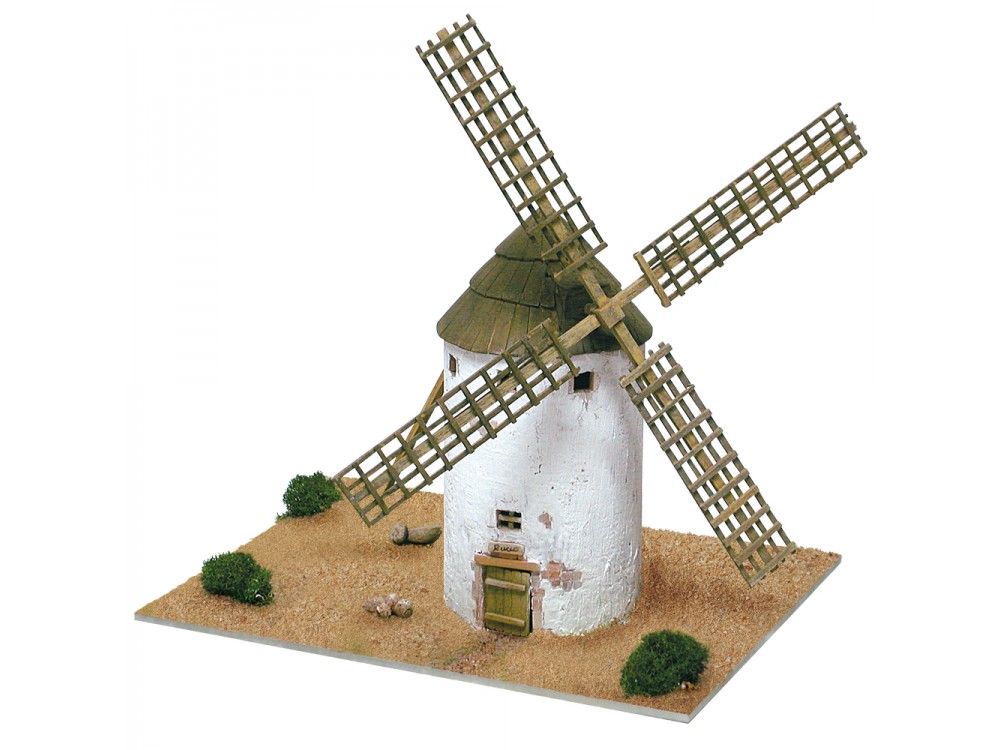
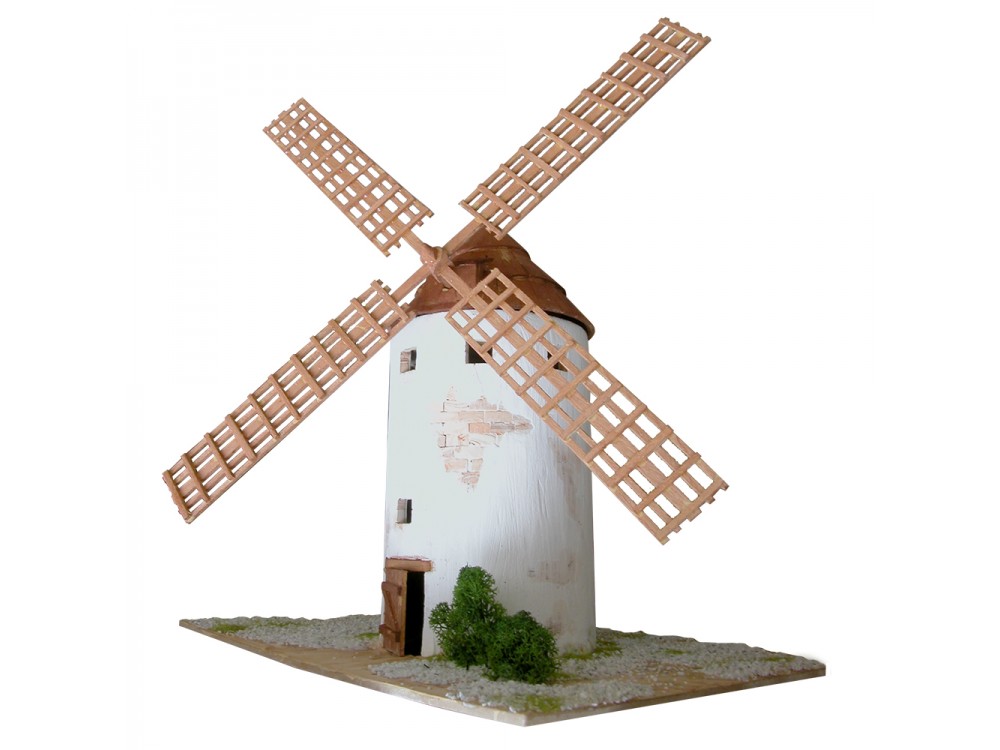
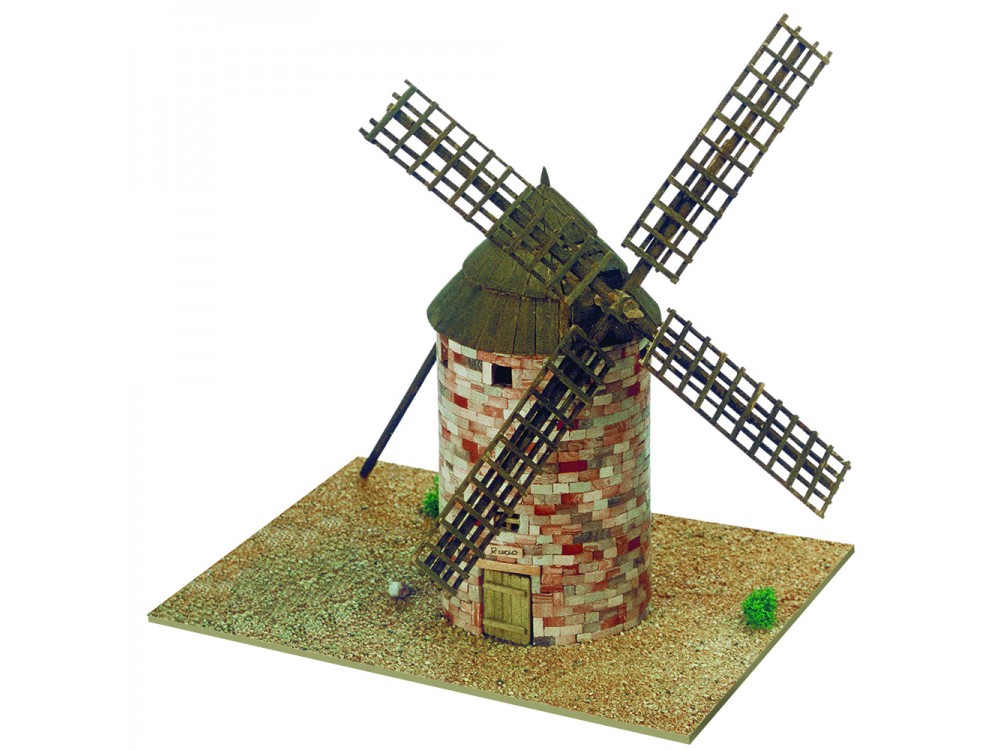
La Mancha Windmill model kit
Consuegra Windmills: Historical and Architectural Reference
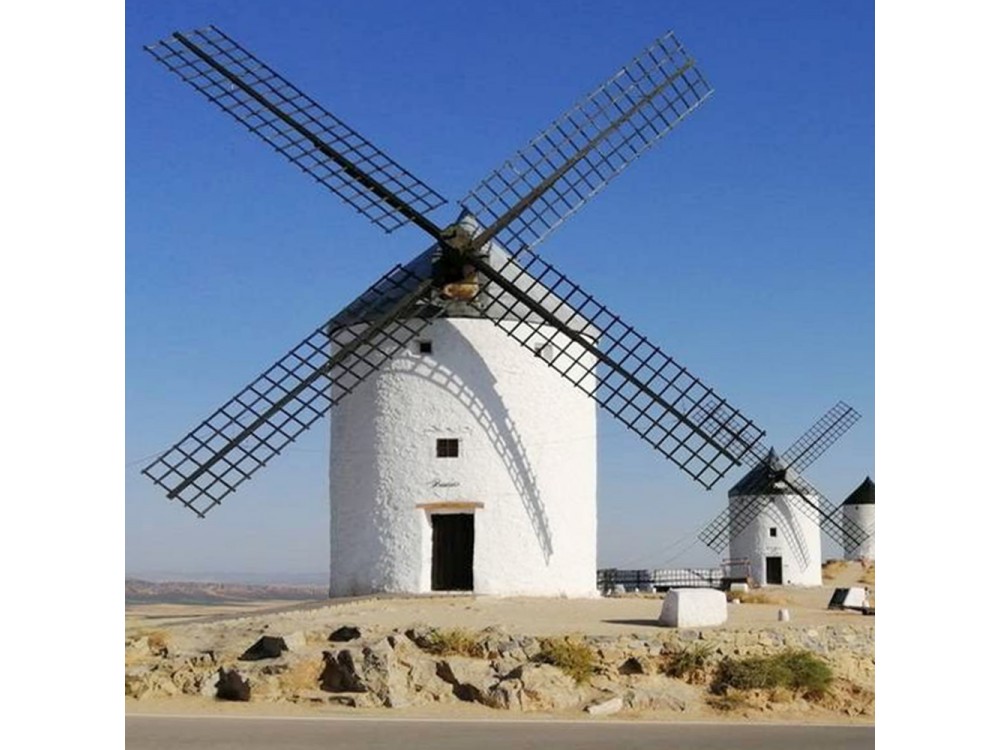
Rising on the Cerro Calderico (Toledo), the windmills of Consuegra form one of the most recognizable milling ensembles in Spain. Today, twelve of the original thirteen are preserved, outlining the ridge of the hill alongside the Castle of La Muela; the site has been declared a Cultural Heritage Site.
The establishment of windmills in La Mancha responded to a grain-based economy in a “dry land,” where the lack of regular streams made watermills unfeasible. In Consuegra, some examples date back to the 16th century, although the majority of the current ensemble was consolidated between the 18th and 19th centuries.
These are tower mills (Mediterranean typology): whitewashed masonry cylinders with three interior floors and a rotating conical cap. The ground floor was used as a granary, the intermediate level as the screening room, and the upper floor housed the grinding mechanism; small high windows helped the miller read the wind. On the outside, four sails and the long steering pole oriented the cap. Several of the mills still preserve their complete machinery.
In short, the windmills of Consuegra combine ethnographic, technological, and landscape value: vernacular architecture adapted to the wind, ingenious wooden mechanics, and a cultural landscape inseparable from Cervantes’ portrayal of La Mancha.
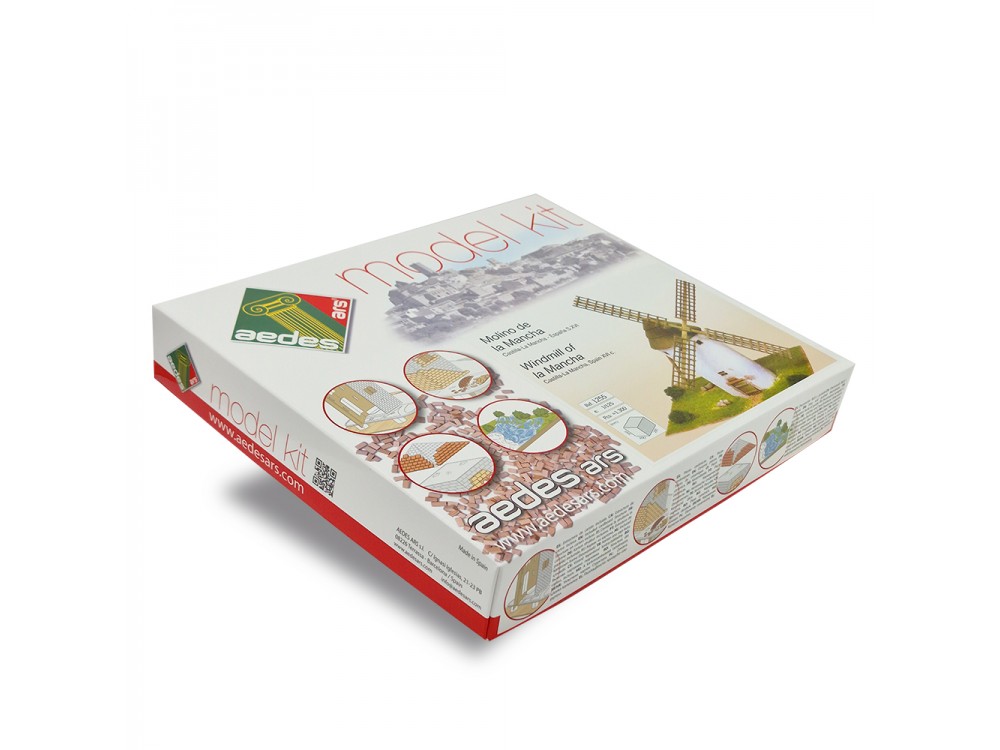
For those who wish to take a piece of this tradition home, it is possible to reproduce one of the Consuegra windmills in miniature through the Aedes Ars scale model, built with tiny construction bricks. This piece combines educational value with entertainment.